

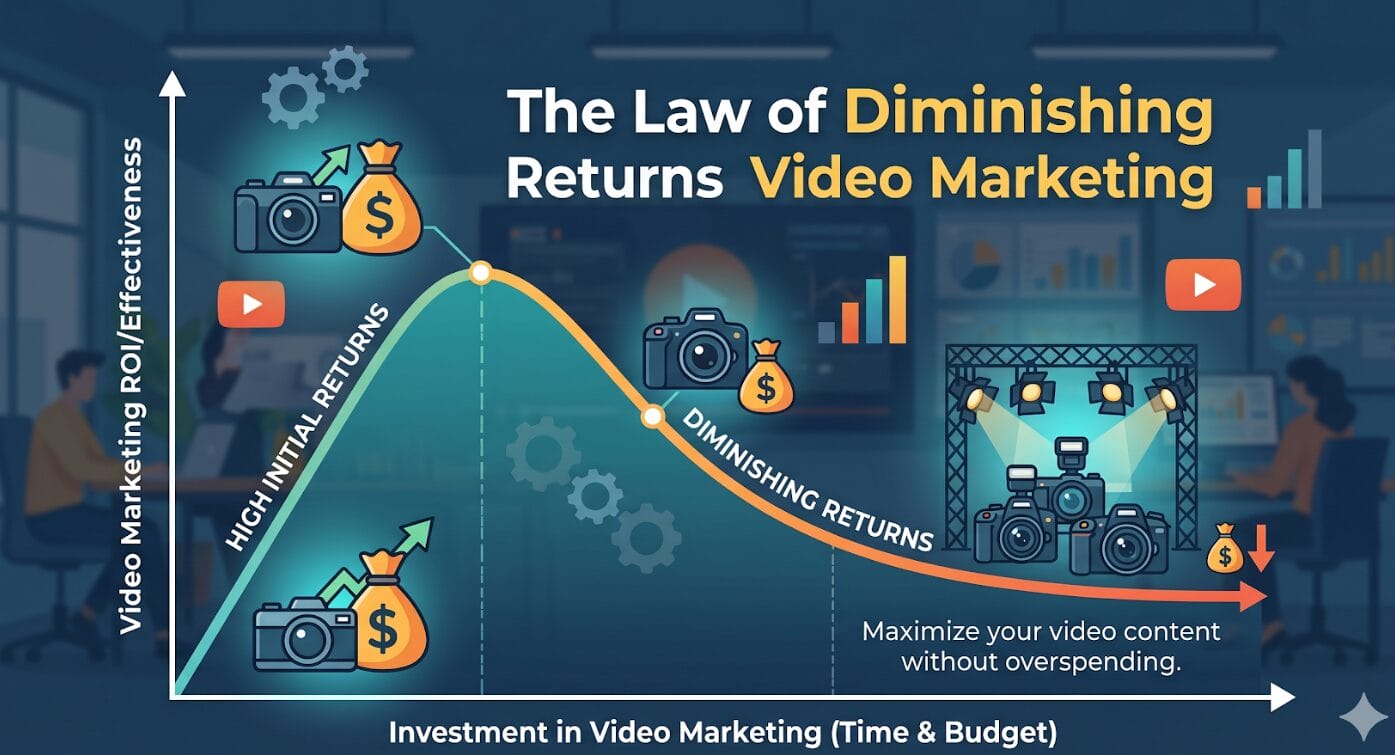
I’ll be the first to say that video marketing is one of the most powerful tools in your school’s arsenal for brand awareness, attracting new students, and keeping current students engaged. If you believe that, it stands to reason that you’ll invest in creating strong video content each year.
But once you move through the concept stage and into revisions, something interesting happens. Decisions that normally wouldn’t carry much weight suddenly feel massive. They become “big” decisions simply for the sake of being big, even when they don’t actually move anything forward.
At some point, you have to ask: no matter how many changes we make or how much more we spend, are we really improving the outcome in a meaningful way?
That’s where the law of diminishing returns shows up.
One of the biggest traps in school marketing is chasing perfection—whether it’s your website, logo, messaging, or video content. The problem is that perfection isn’t attainable. Marketing behaves a lot like art, and art is subjective.
In the middle of a revision or brainstorming session, when opinions start to clash, it helps to pause and ask a simple question: are we making this decision based on personal taste, or are we making it to hit our goals? Every choice should help move a family forward in the enrollment journey.
The first 80% of a video delivers about 90% of the impact. The final 20% is where time, money, and energy quietly disappear.
Schools often love most of the video, then spend disproportionate effort reworking that last 20%. And that’s where the conversations tend to get stuck on details like:
- What’s the exact title for this employee’s lower third?
- Do we need more shots of a faculty member who’s been here for 25 years?
- Did we represent every group in our current community, even if they’re not the target audience?
- Is the music right?
- Is the pacing too fast or too slow?
- Is the color too saturated—or not saturated enough?
Those details can matter, but the better question is: do these changes make it easier for a parent to say yes?
That doesn’t mean consistency isn’t important. Lower thirds, color, and music should reflect your brand. Just make sure every adjustment serves a purpose—helping families move through your funnel and feel more confident about your school.
If you want to chat about video marketing for your school that stays on brand and gets results, feel free to reach out to me at joe@monzomediapro.com