
When it comes to creating compelling video marketing content for schools, most marketing and communications professionals do not struggle with the video itself. They struggle with coordinating it. As the marcom director at your school, that responsibility usually falls to you as you work with the video team, faculty, and school leadership.
The video project gets approved, you hire a strong video partner, everyone says they are excited, and then no one is fully sure what needs to happen next. That is when the scheduling headache begins.
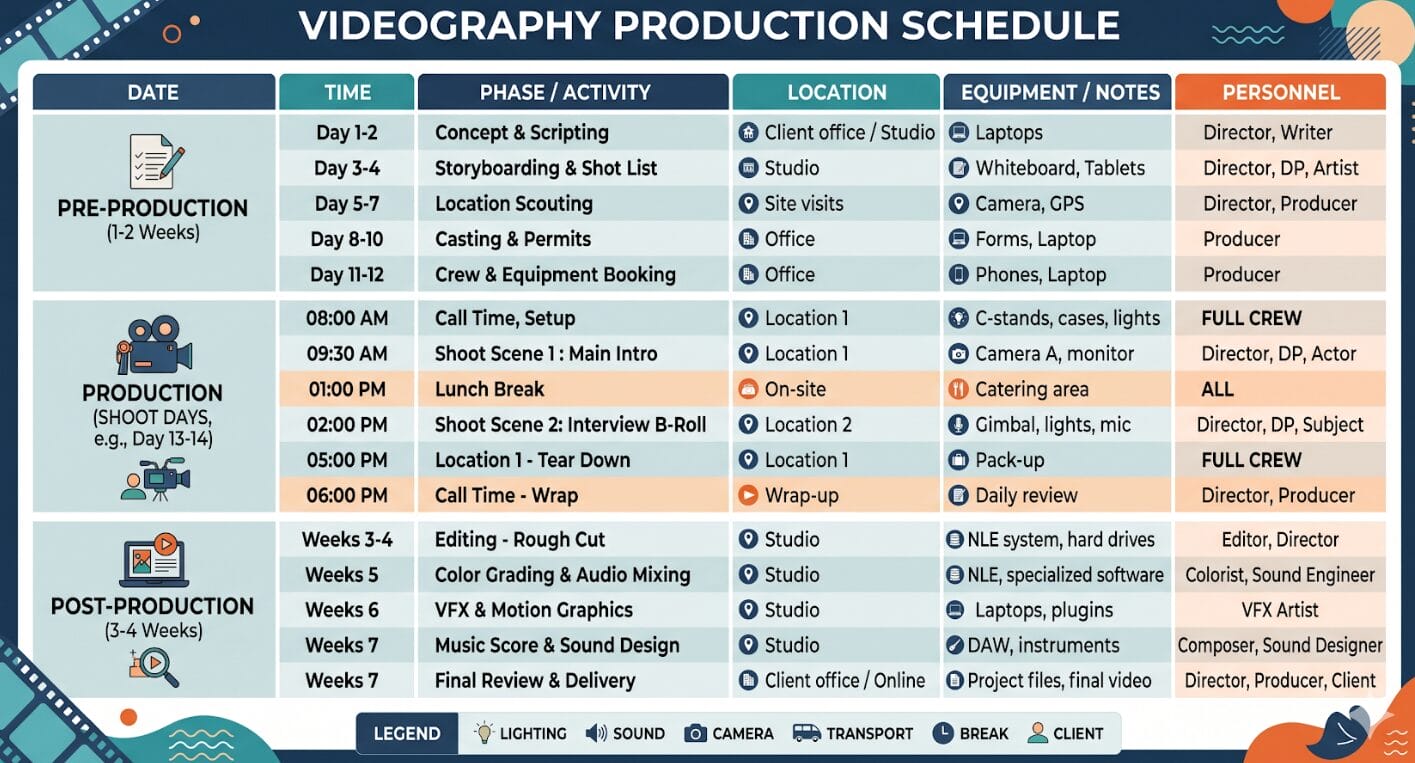
A good filming schedule is not just a few dates on a calendar. It requires a clear sequence of tasks. When schools handle those tasks in the right order, filming gets easier, staff feel less stressed, and the final content is stronger.
Here is how schools should actually schedule filming with an outside video partner.
Start by developing a scene list or shot list and by identifying the interviews you want to schedule. These may include student or parent testimonials, as well as interviews with leadership or faculty members. The B-roll you want to capture may include classroom footage, group scenes, and coverage of specific programs you want to highlight, along with anything else that supports the story your school wants to tell. Having a clear sense of what you want to film is the first major step.
Once you know what you want to film, the next step is figuring out how to capture it efficiently. Depending on the scope of work, this may vary based on the number of filming days. In general, you should avoid multiple half-day shoots with a couple of hours here and a couple of hours there. It is far better to build momentum across focused filming days. That helps financially, and it also helps the crew settle into the rhythm of the project.
For example, if you are working on a few different videos and have two days to film, a smart approach is to devote most of day one to interviews and most of day two to B-roll. That structure gives your video partner the chance to hear the story first and then capture visuals that support it.
When it comes to interviews, begin by reaching out to people you believe will be strong subjects. That may include students who represent your school well, parents who can offer thoughtful testimonials, and faculty members who truly reflect the spirit of the school. Do not leave this outreach until the last minute. It is best to contact people two to three weeks in advance. That gives you time to adjust if someone is unavailable. It also helps to send reminders as the filming date gets closer.
Create a Google Doc or shared schedule with interview time slots. In most cases, each interview should be scheduled for about 10 to 15 minutes, with 20 minutes if you want some buffer. You should also reserve rooms for these interviews ahead of time. A classroom or the library usually works well because those spaces feel natural and help reinforce the setting. A conference room tends to feel too corporate for a school video.
Scheduling B-roll requires the same level of planning. You do not want to walk into a B-roll day and decide on the spot what to film. You need a clear game plan and a structure for the scenes you want to capture. Reach out to teachers ahead of time and ask whether the crew can film briefly in their classrooms. Most of the time, that request is well received when it is communicated in advance. If a class is taking a test or quiz, that is usually a sign that it is not the right moment to film.
Be as specific as possible about what you are trying to capture. If your video is centered on certain students or faculty members from the interviews, make sure their schedules line up with the filming plan you are building.
It is also important to let the school community know that filming will be taking place. Choose a day when students are in dress code, if your school has one, and when there are no unusual activities that could distract from the shoot. Avoid days with field trips or other events that leave half the school off campus, since those are usually not ideal for filming B-roll.
The stronger the planning is before filming starts, the smoother the shoot will be. Good school video production is rarely held back by the camera crew. It is usually held back by scheduling that was treated as an afterthought.
If you want to chat about creating video content for your schools marketing and enrollment efforts feel free to email me at joe@monzomediapro.com